Automated plating lines, engineered around your parts.
Tanks, transfer, rectification, filtration, heating and ventilation designed and integrated
as one system, and run by control software written around how your line actually works.
We quote the real scope and the real lead time before you commit.
A line is only as good as the weakest station in it. We scope every element against the
same part spec, so the rectifier, the filtration loop and the hoist cycle all agree with each other.
Process tanks & station layout
Polypropylene, PVC, CPVC, PVDF or lined steel, sized to the load and dwell time each stage needs,
with weirs, drains, containment, covers and the rinse strategy built in from the start.
Transfer & material handling
Overhead, side-arm and rail-rider hoists for rack, barrel or basket work. Flight bars, lift heights
and index times set by your cycle, with drip management between stations.
Rectification & power
DC supplies sized to the surface area at your current density, with bus bar and cabling detailed
for the run length. Pulse and periodic-reverse where the finish calls for it.
Filtration & solution control
Turnover rates matched per bath, chemistry-rated wetted paths, carbon polishing where the process
needs it, and dosing tied back into line control.
Heating & temperature
Immersion heating in the sheath your chemistry allows, PID control, redundant over-temp cutoff
and low-level protection on every heated tank.
Ventilation & containment
Lip and push-pull extraction, ducting, scrubbing and mist elimination scoped with the line
rather than added afterwards.
The transfer is the heartbeat of the line. Hoist speed, lift height and drip time
set the cycle for every station behind it, which is why we scope the handling and the tanks
against the same part spec, not separately.
Example layouts
How a line gets laid out
These are representative station sequences, the kind of plan we work through with you before
anything is quoted. Station count, tank volumes, dwell times and rinse strategy all change with your
part mix, load size and required thickness.
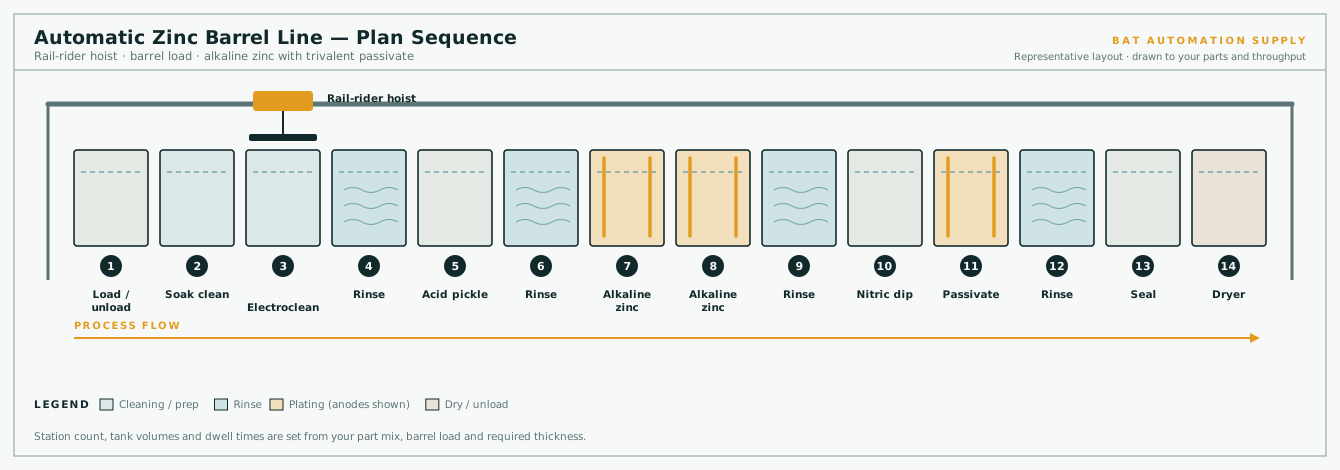
Automatic zinc barrel line. High-volume small parts on a rail-rider hoist,
soak and electroclean, acid pickle, two alkaline zinc stations for thickness, trivalent passivate,
seal and dry. Counter-flowed rinses keep water use down.
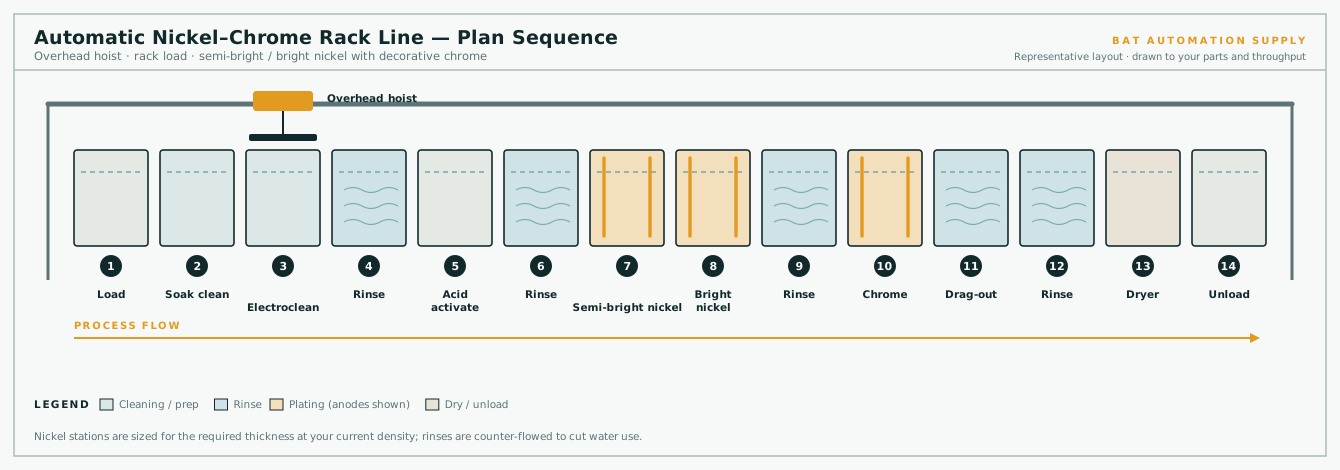
Automatic nickel-chrome rack line. Decorative work on an overhead hoist,
semi-bright and bright nickel in sequence for corrosion performance, chrome, then drag-out recovery
ahead of the final rinses.
Both drawings are BAT layouts prepared for illustration. Send us your part, your volume and the
finish spec and we'll work up a sequence against your actual numbers.
Line control software
Software that already knows how plating lines run
Our control package ships with the scenarios a finishing line actually hits, multi-hoist
scheduling, recipe-per-part routing, hold and re-dip handling, drag-out management, alarm and fault
states. The large majority of shops go live on the standard configuration. When your process needs
something the standard build doesn't cover, it's written to extend rather than to be replaced, so
custom sequences are typically a short development cycle instead of a new system.
Recipes per part number
Dwell, current, temperature and station route stored per part. Operators select the part, not
the settings, the line runs the same way on every shift.
Hoist scheduling
Single or multiple hoists sequenced against tank availability and minimum/maximum dwell, so parts
don't sit in a bath longer than the process allows.
Live process monitoring
Temperature, level, rectifier output and cycle state visible on the HMI, with trends kept for
the stations you care about.
Alarms & fault handling
Over-temp, low level, hoist fault and rectifier fault surfaced with the station and the cause,
not a generic code the operator has to guess at.
Access levels
Operator, supervisor and engineering levels so recipe values can't be changed on the floor by
accident.
Data you can pull
Cycle and fault history exportable for traceability, and available to your systems where a
quality standard or a customer audit requires it.
The whole line on one screen. Operators see every station, the hoist position and
the active recipe at a glance, and change parts, not parameters.
Tell us the sequences and interlocks your process depends on and we'll confirm what is
standard, what is configuration, and what needs development, in writing, before you order.
Featured builds
Copper & gold plating lines
Two of the line types we spec most often, laid out, powered and controlled the same way as everything on this page, tuned to the chemistry.
Automated copper plating line
Acid copper wants clean current distribution and tight solution control, and the line is built around that: copper anode bus with basket anodes, filtration turning the bath over continuously, and hoist moves timed so drag-out lands in the recovery rinse instead of the floor. Racks or barrels, strike-and-build sequences, and cascade rinsing are all laid out in the same station plan we quote from.
Copper line, one system. Deep-blue acid copper baths, copper bus and anode baskets,
hoist-timed transfers and counter-flow rinses, quoted as one line, not a pile of parts.
Automated gold plating line
Gold lines are smaller and tighter: compact stations, drip trays everywhere, and drag-out recovery ahead of every rinse because the bath itself is the most expensive thing in the room. We spec the same hoist automation and recipe control at connector-and-jewelry scale, with metal-recovery-friendly rinsing so the gold stays in the loop instead of going down the drain.
Gold line, precious-metal discipline. Compact stations, drip containment and
drag-out recovery at every step, automation sized for high-value, low-volume work.
Zinc and zinc-nickel · nickel and bright nickel · decorative chrome · copper · electroless nickel · anodize · chemfilm · passivation · cleaning and phosphate lines
Tank construction
Polypropylene · PVC · CPVC · PVDF · lined steel, with reinforcement and containment to suit temperature and chemistry
Rinse strategy
Single · counter-flow cascade · spray-over · drag-out recovery ahead of rinses
Utilities integrated
Solution heating and cooling · filtration loops · air agitation · ventilation and scrubbing · DI/RO make-up water
Controls
PLC with touchscreen HMI · recipe storage per part · data logging · remote access where the site allows it
Compliance-ready
Built to support the documentation and repeatability quality standards ask for, we'll confirm exactly what your certification needs before quoting
How a project runs
From part drawing to running line
Define the work
Your part, volume per hour or per shift, finish spec and floor space. This is where a line is
actually decided, everything downstream follows from it.
Sequence & layout
We work up the station sequence, tank sizes and cycle time, and lay it against the space you have.
You see the plan before you see a number.
Quote & lead time
Scope, price and an honest build schedule in writing. If a long-lead item drives the date, we
say which one and why.
Build & integrate
Tanks, transfer, power, filtration and controls built and brought together as one system,
with the control software configured to your recipes.
Install & commission
Set, connected, wet-tested and tuned on your floor, with your operators trained on the
recipes they'll actually run.
Support after
The same people who scoped the line answer the phone afterwards, plus the consumables and
wear parts it needs from then on.
Delivery day is a milestone, not the finish line. The line arrives built and
pre-tested, then gets set, connected, wet-tested and tuned on your floor before a single
production part runs.
Request a quote
Tell us about the line.
Answer what you know, part, volume and finish are enough to start. Attach a part drawing or a
sketch of your floor space and we'll work from that. A person who knows plating reads every request.