A plating tank is a chemical containment vessel that happens to hold parts. Material, wall thickness, reinforcement and temperature rating all follow from what goes in it, so that is where we start, before anything gets quoted.
Nearly every tank problem we get called about traces back to something that was left off the original order, no containment, no reinforcement at temperature, or a material that was fine cold and crept once the bath was heated.
Polypropylene, PVC, CPVC, PVDF or lined steel. The choice is driven by the chemistry and the operating temperature together, plenty of materials that handle a chemical cold will not hold shape hot.
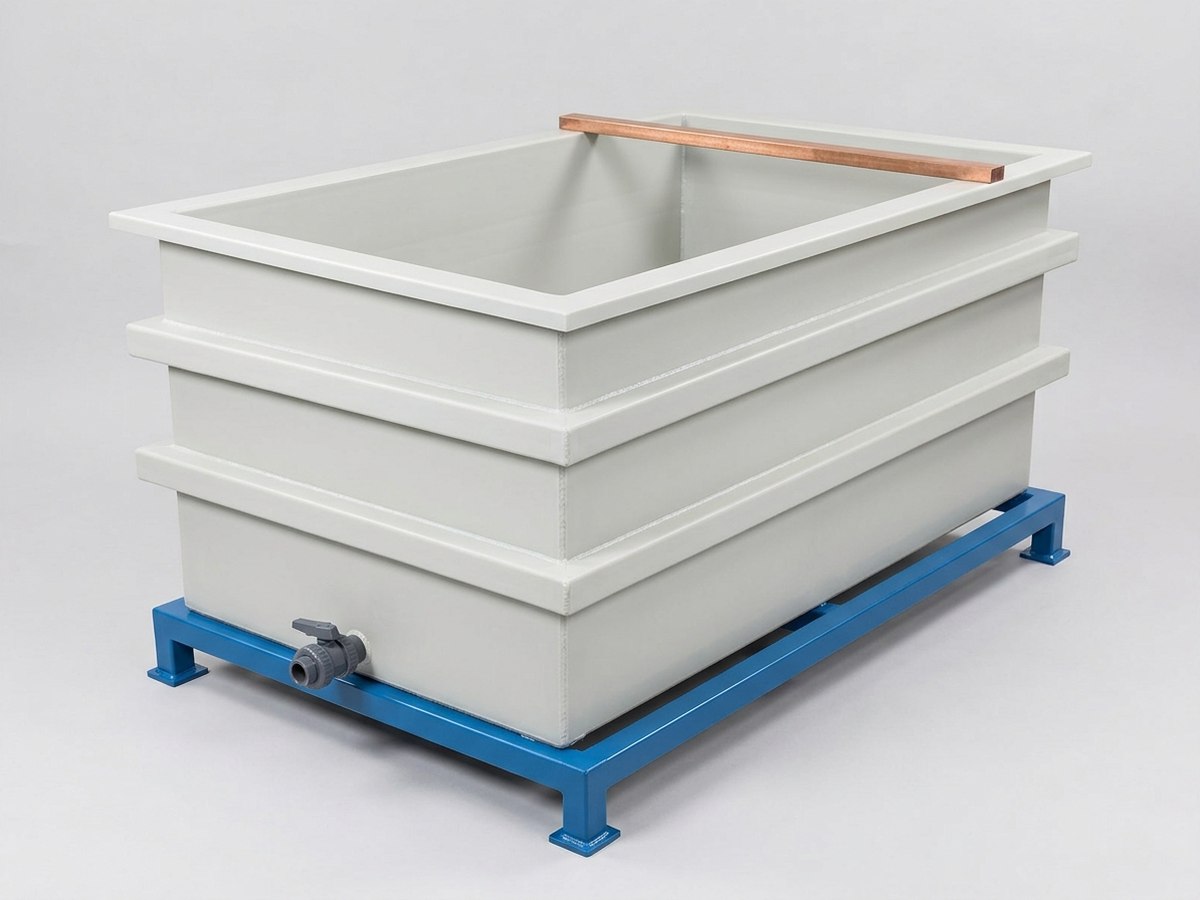
Hydrostatic load rises with depth, and every material loses stiffness as it warms. Tall or heated tanks get thicker walls, external ribbing or a structural frame so the sides stay flat in service.
Overflow weirs for rinse cascades, bottom or side drains where you need to dump a bath, and connections sized so the tank can actually be emptied on a shift change.
Secondary containment sized to the tank volume, which is what most local codes and insurers expect on anything holding process chemistry.
Covers cut evaporation, hold heat in and keep the room out of the bath. On heated tanks they pay for themselves in energy before they pay for themselves in housekeeping.
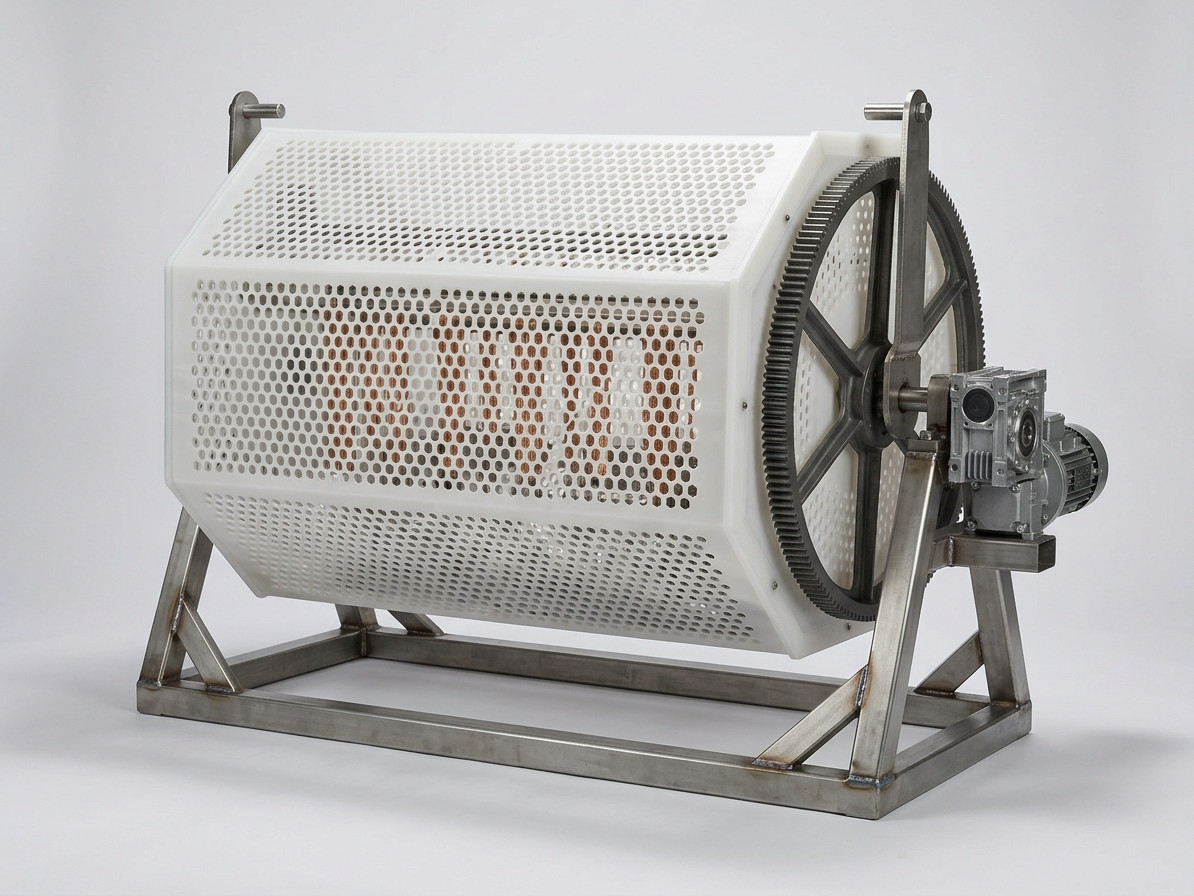
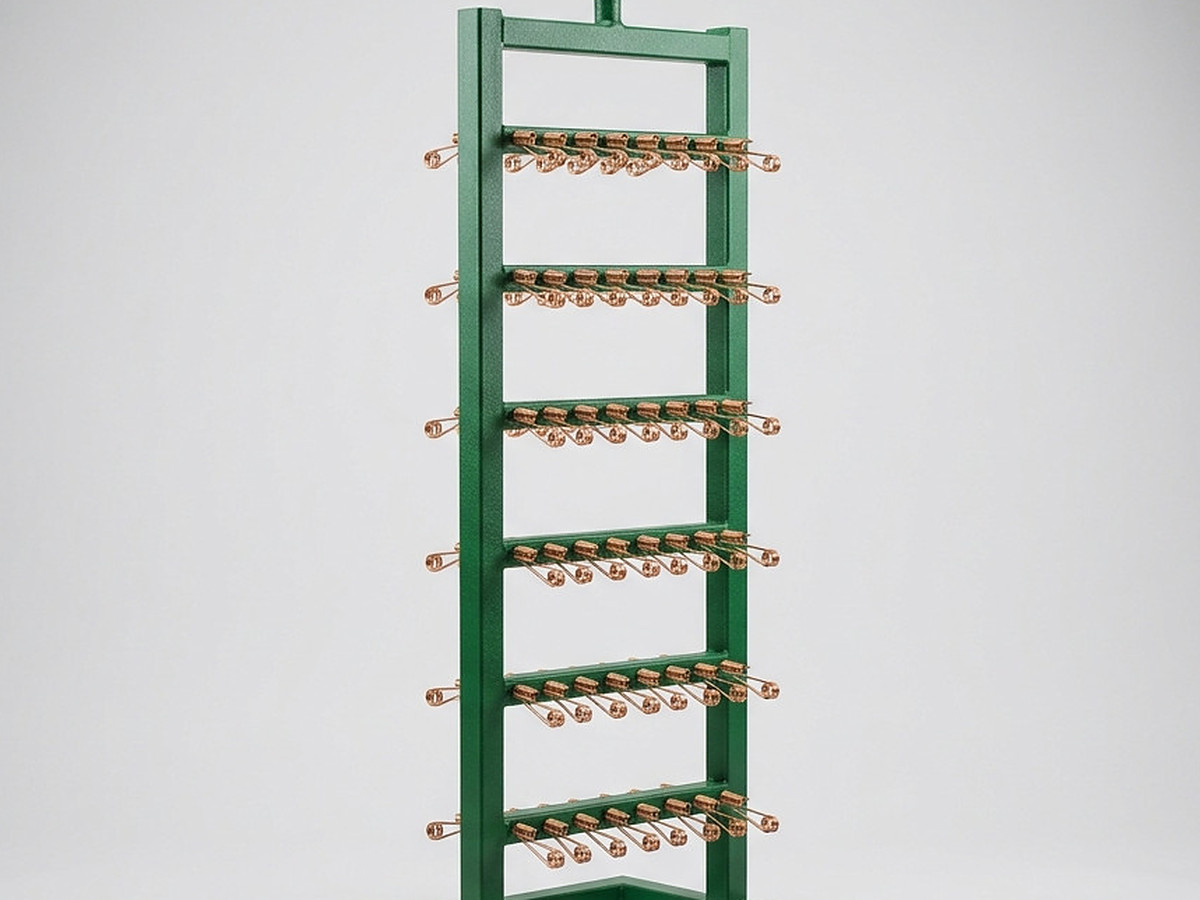
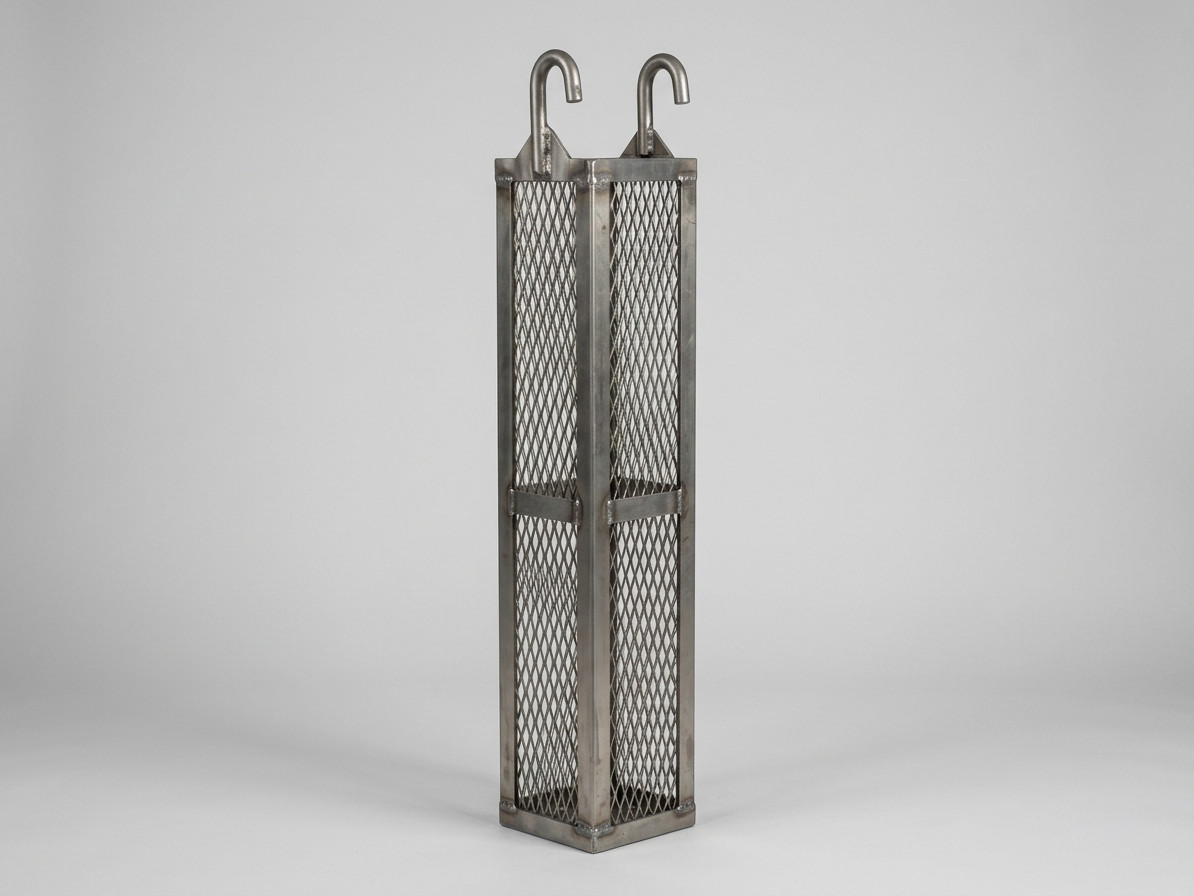
Barrels, racks, jigs, flight bars, anode baskets, hooks and bags, specified with the tank so the work window, the anode area and the current path all agree with each other.
Polypropylene, PVC, CPVC, PVDF and lined-steel tanks, plus the barrels, racks and anode hardware that go in them, sized to your chemistry, temperature and footprint.

Rectangular and cylindrical tanks fabricated in PP, PVC, CPVC, PVDF or lined steel for plating, cleaning, rinse, passivation and anodizing lines.

Horizontal plating barrels for high-volume small-parts finishing, with gear or direct drives and perforation patterns matched to your parts.

Coated plating racks and jigs built for your part geometry, maximize density per flight bar while keeping contact points consistent.

Titanium anode baskets and hooks that hold anode material securely and keep current distribution even across the work window.
Every quote includes the exact price and the honest lead time, if it's a ten-week build, we say ten weeks before you order. Configurations shown are representative; we spec each order to your line.
Typical service limits published for each material. They are a starting point for the conversation, not a substitute for it, concentration, oxidisers and duty cycle all move these numbers, and we confirm the selection against your actual bath before quoting.
| Material | Typically suited to | Typical max service temp |
|---|---|---|
| Polypropylene (PP) | The general-purpose choice for plating, cleaning and rinse tanks. Broad acid and alkali resistance, good hot strength for the price. | About 180 °F |
| PVC | Cool acid and alkaline service, rinse tanks, ducting and pipework. Rigid and easy to fabricate, but it softens early. | About 140 °F |
| CPVC | Where PVC chemistry is right but the bath runs warm, hot acid rinses and heated cleaners. | About 200 °F |
| PVDF | Aggressive oxidisers, high purity work and hot chemistry where PP will not hold up. The premium option, specified where it earns it. | About 250 °F |
| Lined steel | Large volumes, deep tanks and heavy mechanical duty where a structural shell carries the load and the liner handles the chemistry. | Set by the liner |
| 316L stainless | Alkaline cleaners, hot rinses and DI water. Not for chloride or acid service. | High, chemistry-limited |
Send what you have and we will fill the gaps with you, nobody gets turned away for an incomplete spec. These are simply the answers that let us quote without a round of questions first.
Bath name and concentration, plus the operating temperature. Together they decide the material, and nothing else can be settled until they are.
Either the volume you need or the length, width and depth you have room for. Add freeboard for agitation and for the work going in and out.
Rack, barrel or basket, the load size, and the flight bar span. This sets the work window, the opening and the anode positions.
Anything that penetrates or hangs on the tank, heaters, sparge headers, filter connections, level controls, is better cut in at build than drilled in afterwards.
Door width, ceiling height, floor loading and how the tank gets into the building. This has changed more designs than any other single item.
It depends on depth, temperature and whether the tank is externally supported. Hydrostatic pressure rises with depth and thermoplastics lose stiffness as they heat, so a deep hot tank needs materially more wall or external reinforcement than a shallow cold one of the same footprint. We size the wall and the ribbing against your dimensions and operating temperature rather than working to a single default thickness.
Yes. Send a dimensioned drawing or a sketch with the chemistry and temperature noted and we will quote it as drawn, and tell you plainly if we think something on it will cause trouble in service.
Yes, relining an existing steel shell is often the cheaper route when the structure is sound and only the chemistry-facing surface has failed. Send photos of the current condition and the tank dimensions.
Freeboard is the distance from the solution surface to the tank rim. It absorbs displacement when work enters, contains the surge from air agitation, and gives lip exhaust something to pull across. Tanks with vigorous agitation or large loads need more of it than a still tank.
Yes. Give us the carrier dimensions, the flight bar span and the immersion depth you need, and we size the tank around the equipment you already run.
Answer what you know and skip the rest, a person who knows plating reads every RFQ and comes back with a price and an honest lead time, usually the same business day. Attach drawings or a photo of the old part and we'll work from that.