Amperage, ripple and control quality show up directly in the finish. We size rectifiers against the surface area you actually run at the current density your chemistry calls for, with headroom, because a supply run flat out all day does not last.
Power, control and handling are one problem on an automated line and three separate purchases on a manual one. We quote either way.
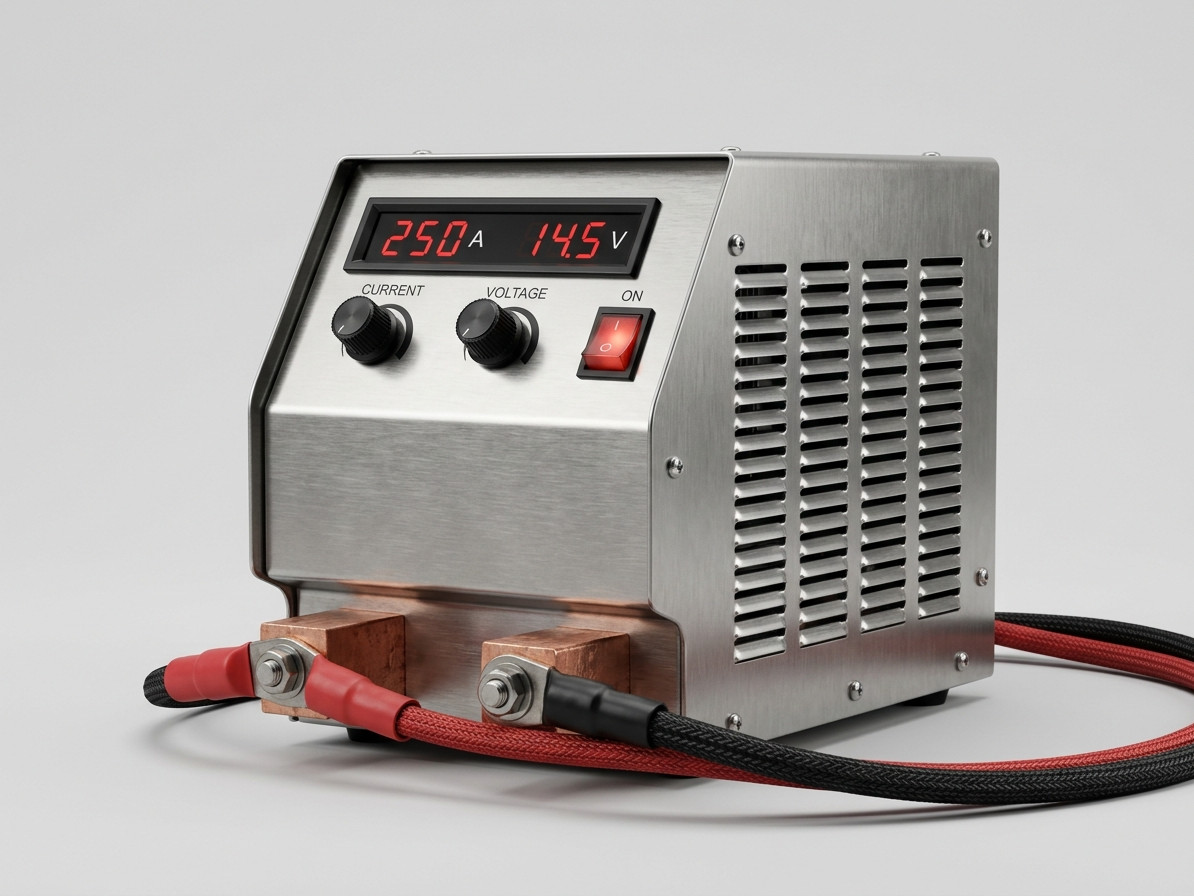
Air and water cooled units across a wide output range, in constant-current or constant-voltage control.
Where throwing power, deposit structure or a hard-to-plate geometry calls for it, rather than as an upsell on every quote.
Detailed for the run length and the current. Voltage drop and heating in an undersized bus is a real and commonly overlooked cost.
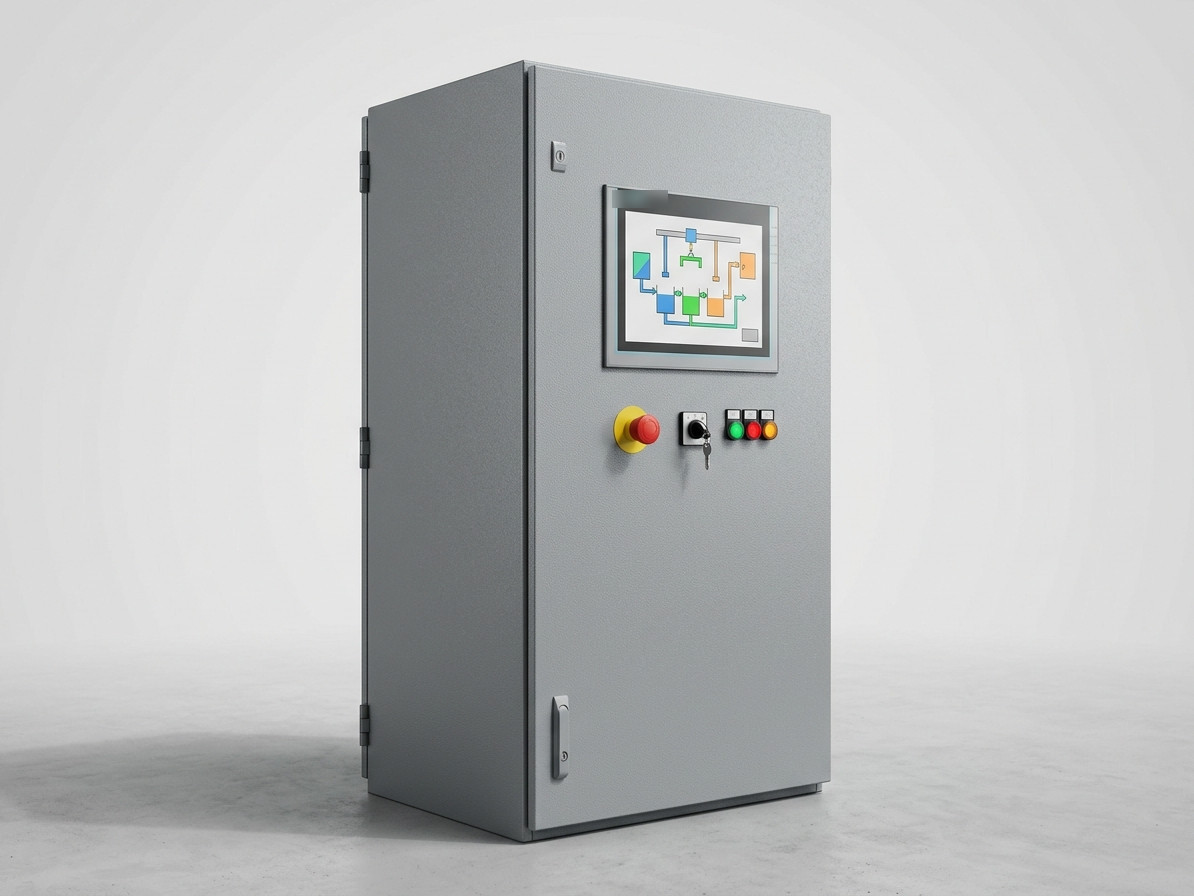
Hoist sequencing, bath timing, dosing and data logging in one enclosure, with a touchscreen HMI and recipe storage per part.
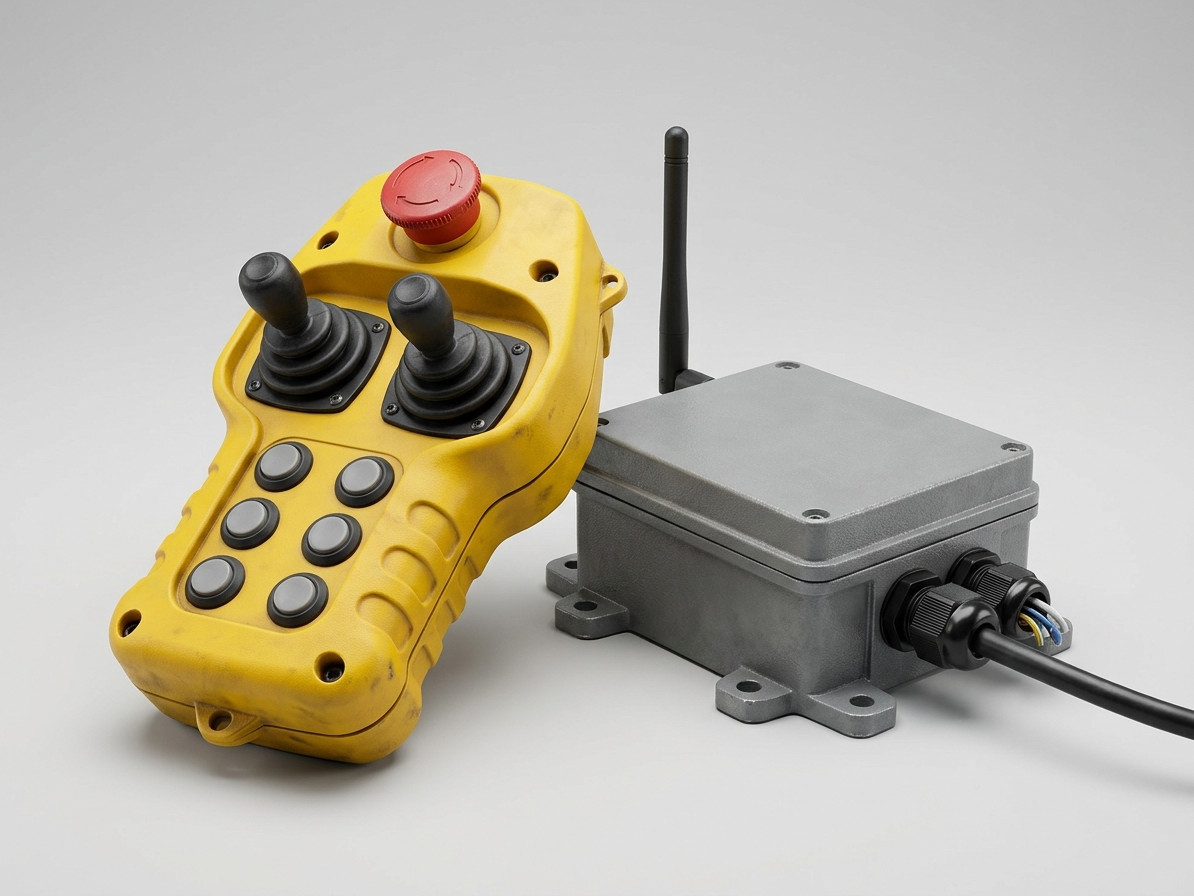
Multi-channel transmitters with E-stop as standard, so the operator is not standing over an open tank to run a transfer.
Manual and powered handling for flight bars, barrels and baskets, in finishes that survive a plating room atmosphere.
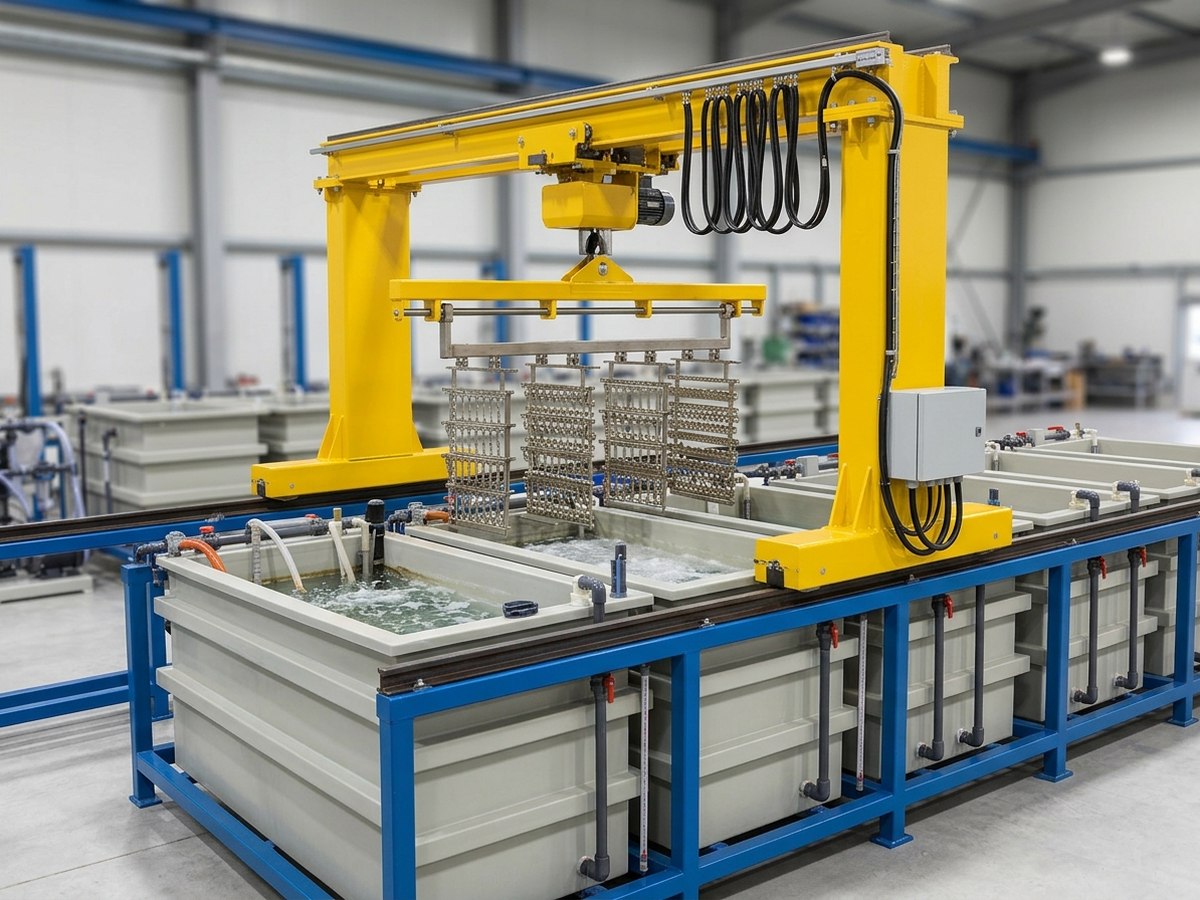
From a single rectifier to a complete automated line, DC power, PLC control and material handling, engineered around your parts, your throughput and your floor space.

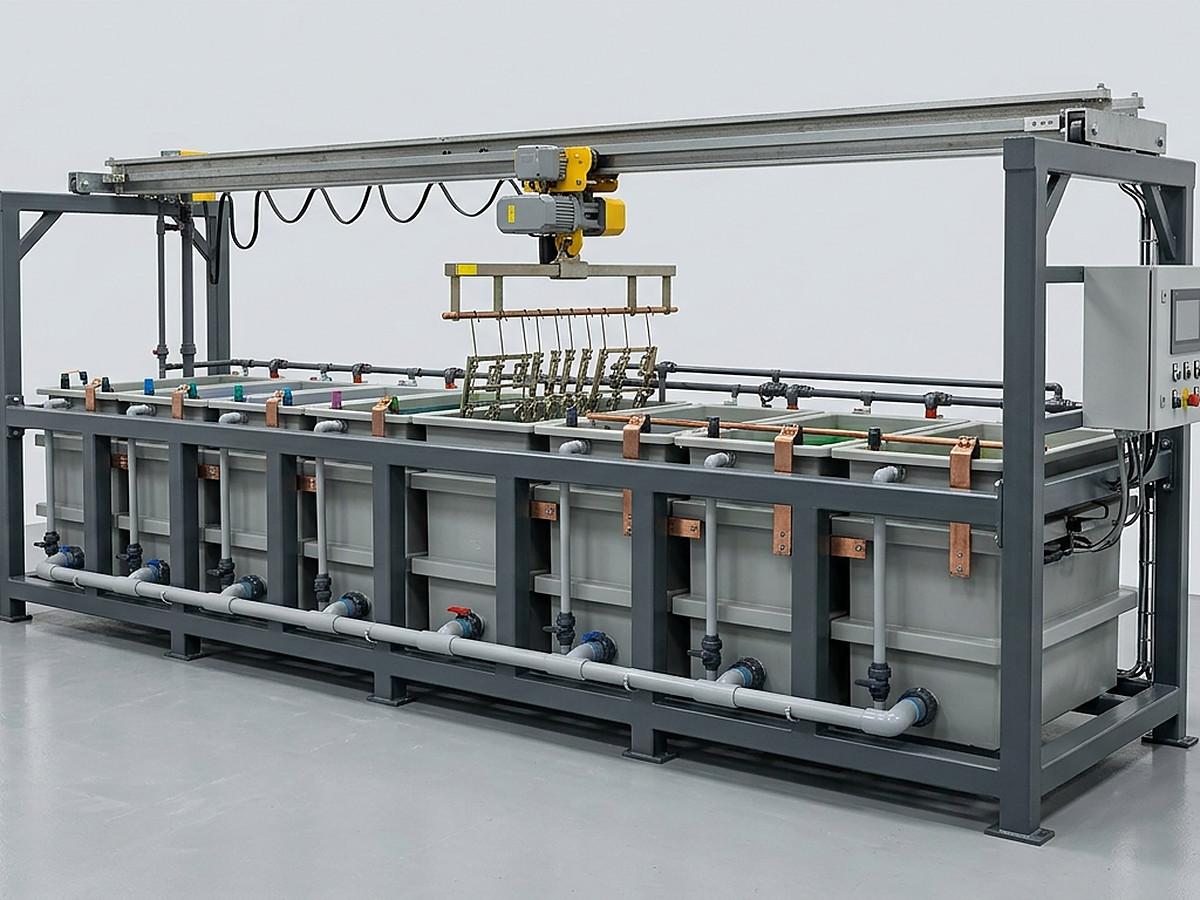
Complete turnkey finishing lines, multi-station tanks, overhead hoist transporters, rectification and PLC control engineered and integrated as one system, built around your parts and throughput.

Air- and water-cooled rectifiers from bench-top to multi-thousand-amp line units, with analog or digital control.

Line-control cabinets with PLC and HMI, hoist sequencing, bath timing, dosing and data logging in one enclosure.

Wireless transmitter/receiver sets for cranes and hoists, keep the operator away from the tanks while running transfers.

Manual and powered gantries and hoists for flight bars, barrels and baskets over open tanks.
Every quote includes the exact price and the honest lead time, if it's a ten-week build, we say ten weeks before you order. Configurations shown are representative; we spec each order to your line.
Published ranges used across the industry as a starting point. Your bath supplier's technical data sheet governs your specific chemistry, we size against that, plus headroom.
| Process | Typical current density | Notes |
|---|---|---|
| Alkaline zinc (barrel) | Lower end, barrel work runs gentler | Barrel loads spread current over a tumbling mass; rack zinc runs higher. |
| Alkaline zinc (rack) | Moderate | Rack work has a fixed, known surface area, which makes sizing more predictable. |
| Bright nickel | Moderate | Agitation and temperature both raise the density the bath will tolerate. |
| Decorative chrome | High | Short cycle at high density. Ripple quality matters here more than in most baths. |
| Hard chrome | Highest of the common processes | Long cycles at very high density, the supply is sized for continuous duty, not peaks. |
| Anodizing | Set by the specification | Frequently run to a specification calling for a fixed density and a defined ramp. |
Send what you have and we will fill the gaps with you, nobody gets turned away for an incomplete spec. These are simply the answers that let us quote without a round of questions first.
The real number, including racks and any auxiliary work. This is the input everything else follows from.
From your chemistry supplier's data sheet. Multiply by area for the amps you need at the bath.
Set by the bath resistance, the anode-to-cathode distance and the bus run. Higher than people expect on long lines.
Continuous production and intermittent job work size differently, and cooling choice follows from it.
Supply voltage and phase, plus whether you have cooling water available or the unit has to be air cooled.
Multiply the surface area of a full load, in square feet, by the current density your process calls for in amps per square foot. That gives amps at the bath. Then add headroom, commonly 20 to 25 percent, so the unit is not running at its ceiling every day and you have room for a bigger load later. Send us your part, your load size and the process and we will work it through with you.
Air cooling is simpler and needs no plumbing, and it suits smaller and intermittent duty. Water cooling handles high continuous current in a smaller footprint and keeps that heat out of the room, which matters more than people expect in a hot plating shop.
Not usually. Straight DC covers most work. Pulse and PR earn their cost where throwing power into recesses, deposit structure or thickness distribution on difficult geometry is the problem, and we will say so plainly when we do not think you need it.
For decorative and specification-driven work, yes. Excess ripple affects deposit appearance and properties, and some specifications state a ripple limit directly. If your work is cosmetic or certified, tell us and we will quote to it.
Often yes. Replacing the control panel and adding recipe handling to sound mechanical equipment is frequently a better spend than a new line. Send photos of the existing panel and hoist and we will tell you honestly whether it is worth doing.
Answer what you know and skip the rest, a person who knows plating reads every RFQ and comes back with a price and an honest lead time, usually the same business day. Attach drawings or a photo of the old part and we'll work from that.