Roughness, pitting and haze are usually a filtration problem before they are a chemistry problem. A loop sized to the tank volume and the turnover the process needs solves more finish defects than any additive does.
A filter system is a pump, a chamber, the plumbing that joins them and the media that does the actual work. Each one has to survive the bath, and each one is a place a system gets specified badly.
Flow is set by the tank volume and how many times an hour the process needs it turned over, not by whatever pump was on the last system.
Cartridge, bag or media chambers in PP, CPVC or PVDF, sized so the filter area suits the flow instead of throttling it.
Every wetted component, housing, seals, gaskets, valves, hose, checked against the bath. One incompatible O-ring is enough to contaminate a tank.
Organic contamination is a carbon problem, not a cartridge problem. Carbon can run continuously or be brought in for batch treatment depending on the bath.
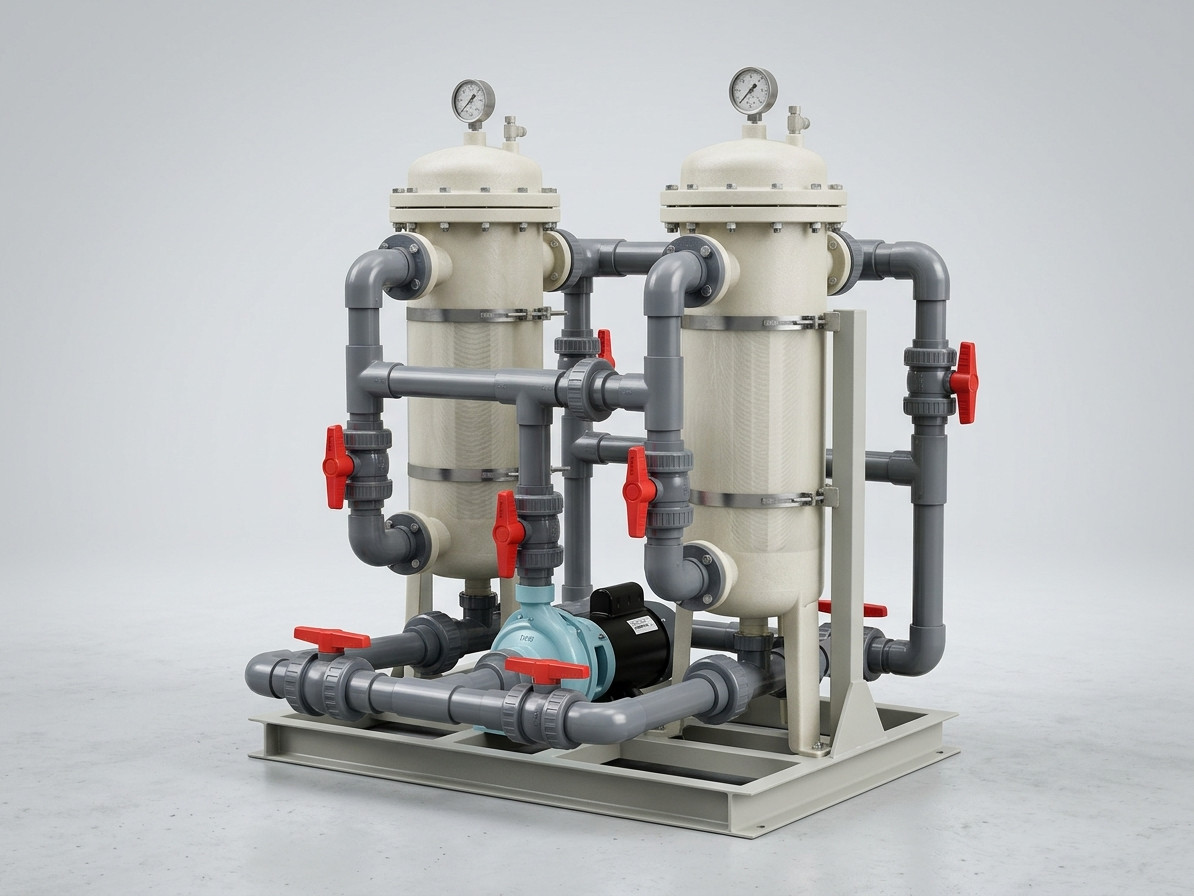
Twin chambers with isolation valves let you change cartridges on one side while the other keeps filtering, worth it on any line that cannot stop for a media change.
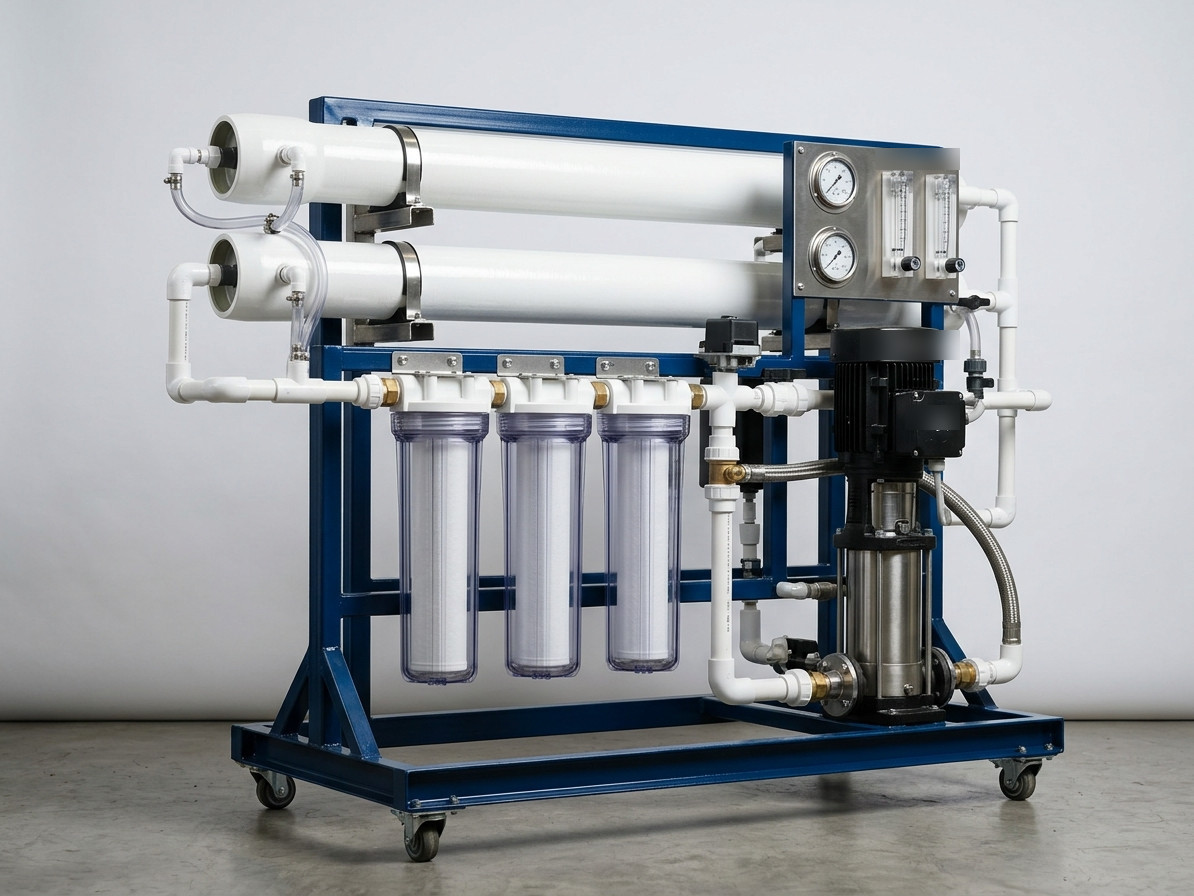
RO and DI for rinse water and bath make-up. Hardness and chlorides carried in with the water end up as bath problems that filtration cannot fix.
Chemical filter systems, chambers and media that keep your bath clear, sized by bath volume, turnover rate and the chemistry they have to survive.

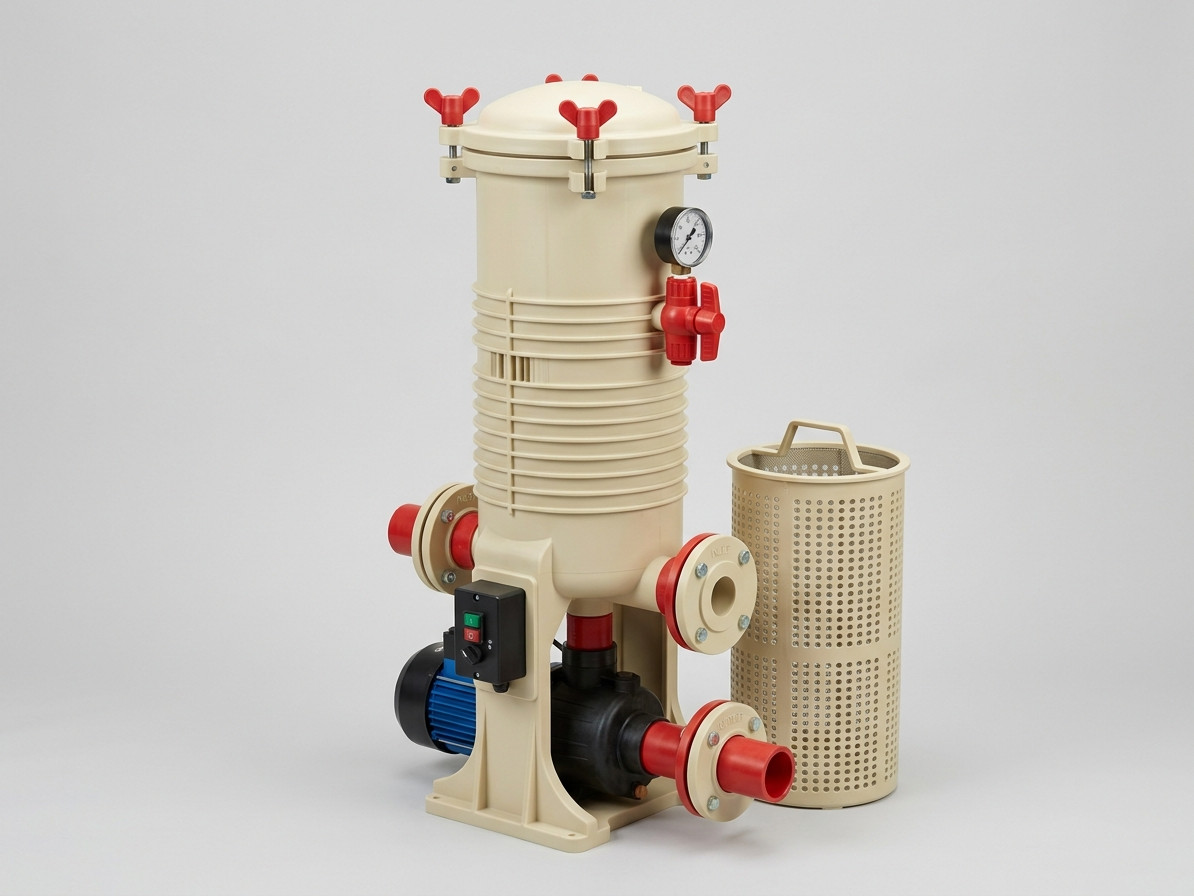
Pump-and-chamber filtration packages in PP or CPVC with chemistry-rated wetted paths, gauges and valves, the workhorse loop on any plating line.

Twin-chamber systems that let you service one chamber while the other keeps filtering, no line stoppage for cartridge changes.

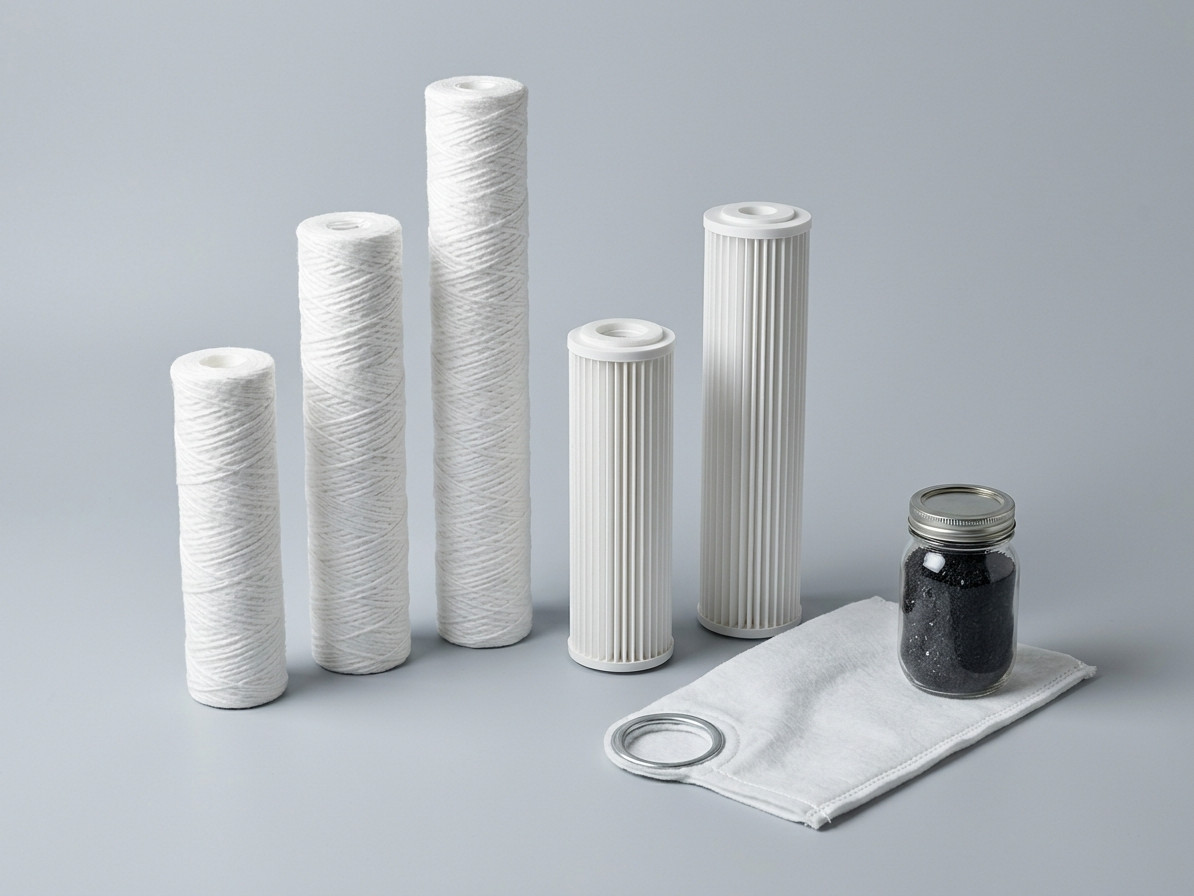
Replacement chambers, filter cartridges, bags and carbon, matched to your existing housings by length, end cap and micron rating.

Reverse-osmosis and DI water systems for rinse water, bath make-up and closed-loop reclaim.
Every quote includes the exact price and the honest lead time, if it's a ten-week build, we say ten weeks before you order. Configurations shown are representative; we spec each order to your line.
Widely used starting points for tank turnovers per hour. Your chemistry supplier's technical data sheet is the authority for your specific bath, we quote against that, and use these only to get the conversation moving.
| Bath type | Typical turnovers per hour | Notes |
|---|---|---|
| Decorative nickel | Higher end, commonly 4 to 6+ | Cosmetic finishes show every particle. Continuous filtration is the norm, often with carbon. |
| Acid copper | Commonly 3 to 5 | Bright acid copper is particle-sensitive; anode bags and continuous filtration usually go together. |
| Alkaline zinc & zinc-nickel | Commonly 1 to 3 | Lower cosmetic demand than nickel, but carbon treatment matters for brightener breakdown. |
| Electroless nickel | Continuous, with care | Particle control is critical to avoid plate-out. Filtration runs continuously and media choice is specific to the bath. |
| Cleaners & soak tanks | Lower, often 1 to 2 | Here the job is removing oil and solids so drag-out does not contaminate the line downstream. |
| Rinse tanks | As required | Usually about water management and reclaim rather than particle removal. |
Send what you have and we will fill the gaps with you, nobody gets turned away for an incomplete spec. These are simply the answers that let us quote without a round of questions first.
In gallons or litres. Everything else scales from this one number.
A cosmetic decorative bath and a barrel zinc line with the same volume are not filtered the same way.
Sets the wetted material for the pump, the chamber, the seals and the hose.
If you are only replacing media, the chamber make and model, or a photo of the old cartridge end cap, is enough for us to match it.
If you are fighting brightener breakdown, oil carry-in or pitting, say so. That is what decides whether carbon runs continuously or as a batch treatment.
Most shops change on differential pressure rather than on a calendar. A rise of roughly 10 to 15 PSI over the clean starting pressure usually means the element is loaded. Falling flow and rising haze in the bath are the other two signals. Fit gauges either side of the chamber if you do not already have them, it turns guesswork into a number.
Finer is not automatically better; it just loads faster and costs more. Cosmetic decorative baths generally run finer than functional ones. Tell us the process and the defect you are chasing and we will suggest a starting point, then adjust based on what you see.
Cartridges remove particles. Carbon removes dissolved organics, brightener breakdown products, oils and drag-in. If the bath is cloudy the cartridge is the answer; if the deposit is dull, pitted or hazy with a clear bath, that is usually organics.
Yes. Fit comes down to length, end cap style (DOE, 222, 226, flat or fin) and micron rating. A photo of the old end cap and the chamber nameplate is normally all we need.
If stopping the line to change cartridges costs you more than the second chamber does, yes. On continuous production it usually pays back quickly; on a single manual tank it often does not.
Answer what you know and skip the rest, a person who knows plating reads every RFQ and comes back with a price and an honest lead time, usually the same business day. Attach drawings or a photo of the old part and we'll work from that.