An immersion heater is a safety device as much as a process device. The sheath has to survive the chemistry, the control has to hold the set point, and the protection chain has to shut it down before it damages a tank or a bath.
Every heated tank should have three things: an element the chemistry cannot attack, a control that holds temperature, and independent protection that acts when something goes wrong.
Titanium, quartz, PTFE-coated or 316L. This is the first decision and the one that most often gets made wrong, a sheath that is right for one acid can fail quickly in another.
Concentrating too much power into too little surface scorches solution at the sheath and shortens element life. More surface area at lower density lasts longer.
Digital control holding the set point rather than a thermostat cycling around it, with the sensor placed where it reads the bath and not the element.
A separate high-limit cutout on its own sensor. If the primary control fails on, this is what stops the tank being damaged.
An element energised in air fails in seconds and can ignite what is around it. Level protection is not optional on any heated tank.
Some baths need heat taken out, chillers and heat exchangers for processes that run warm on their own or must hold a ceiling temperature.
Immersion heaters in the sheath material your chemistry demands, titanium, quartz, PTFE or stainless, plus the controls that keep baths on temperature.

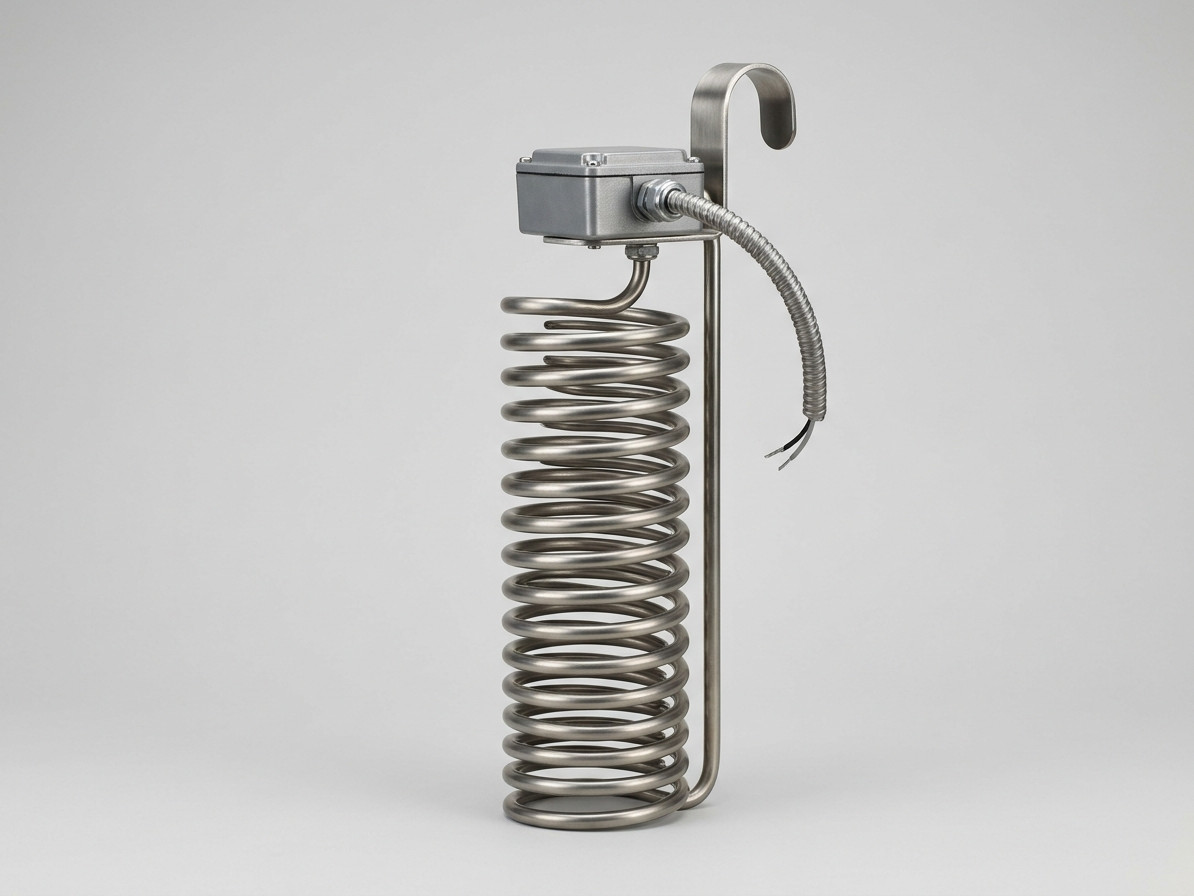
Spiral-coil over-the-side heaters that tuck against the tank wall and leave the work window clear.

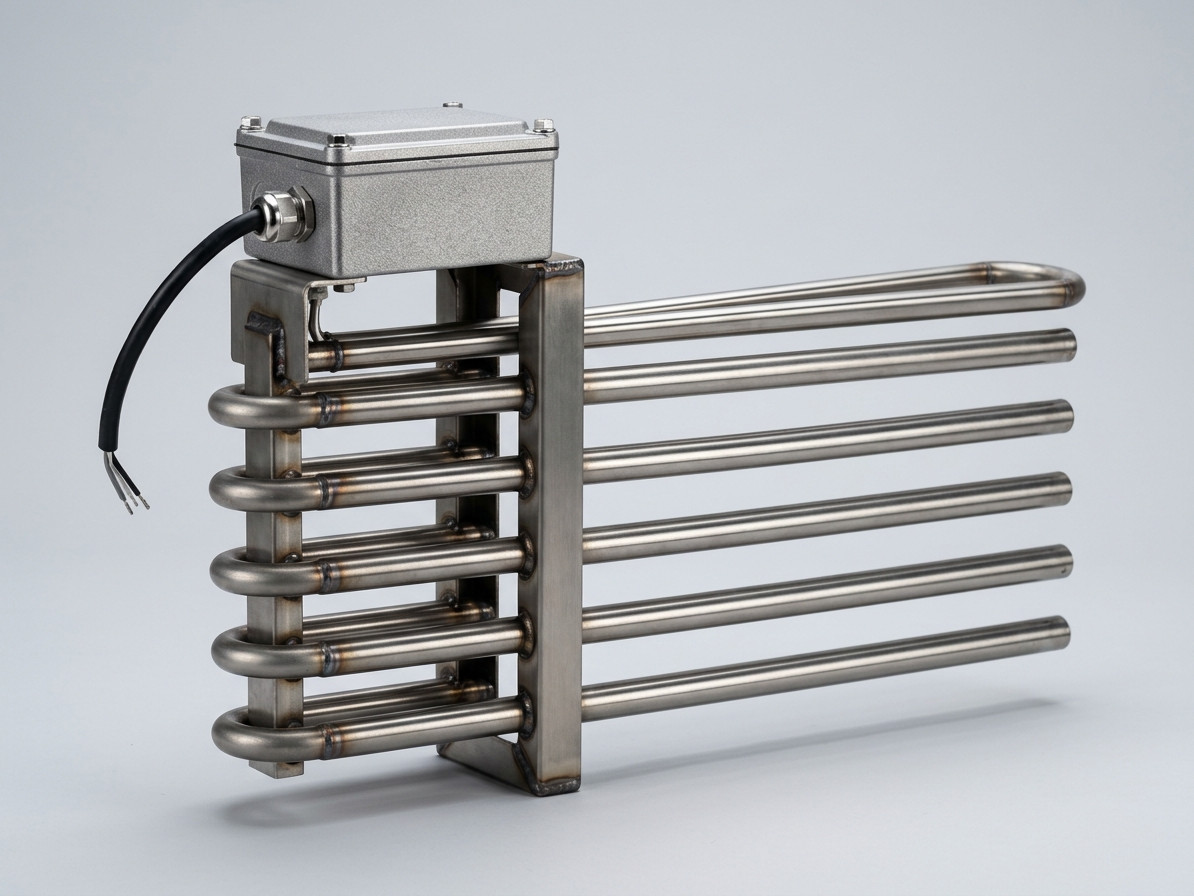
High-surface-area tube-rack heaters for big tanks and fast heat-up, with junction boxes rated for plating-room duty.

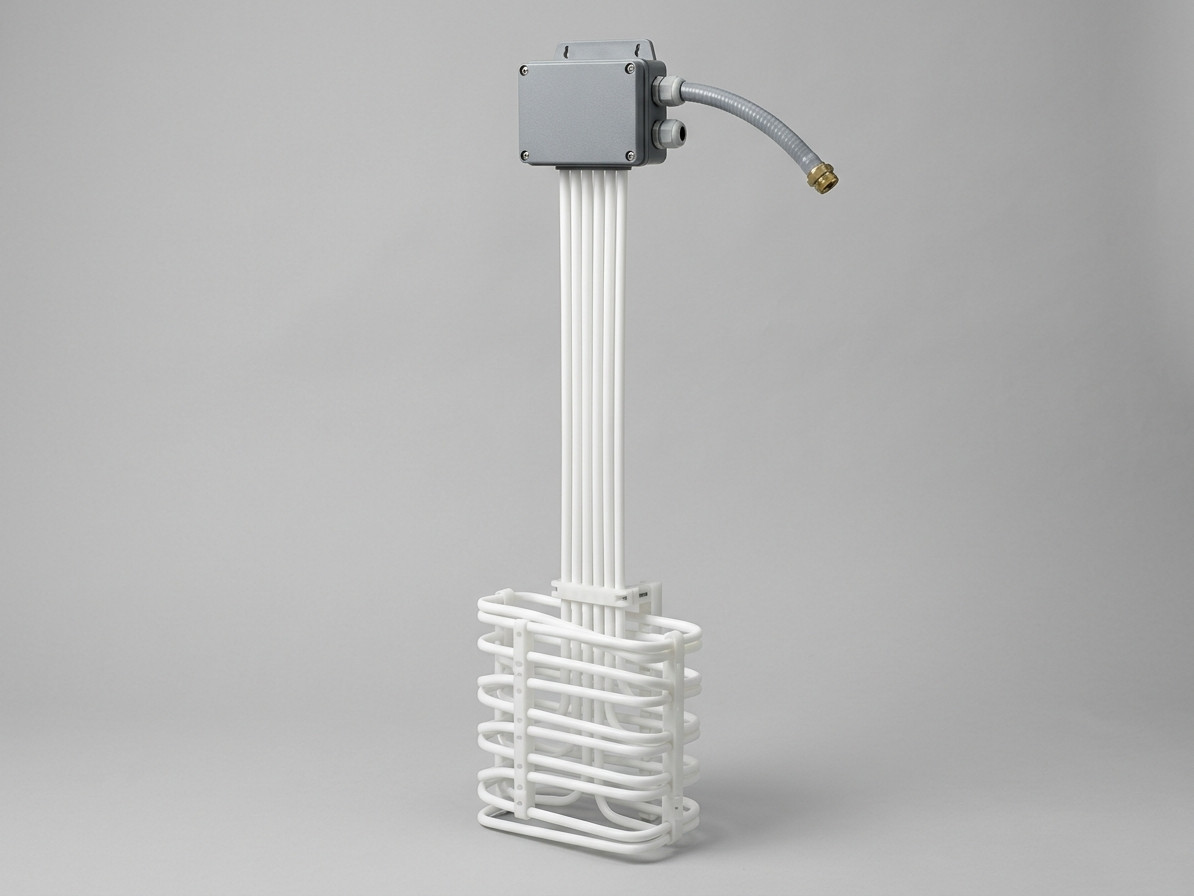
Fully fluoropolymer-sheathed immersion heaters for the chemistries metal sheaths can't survive, chrome, pickles, aggressive acids and mixed baths.

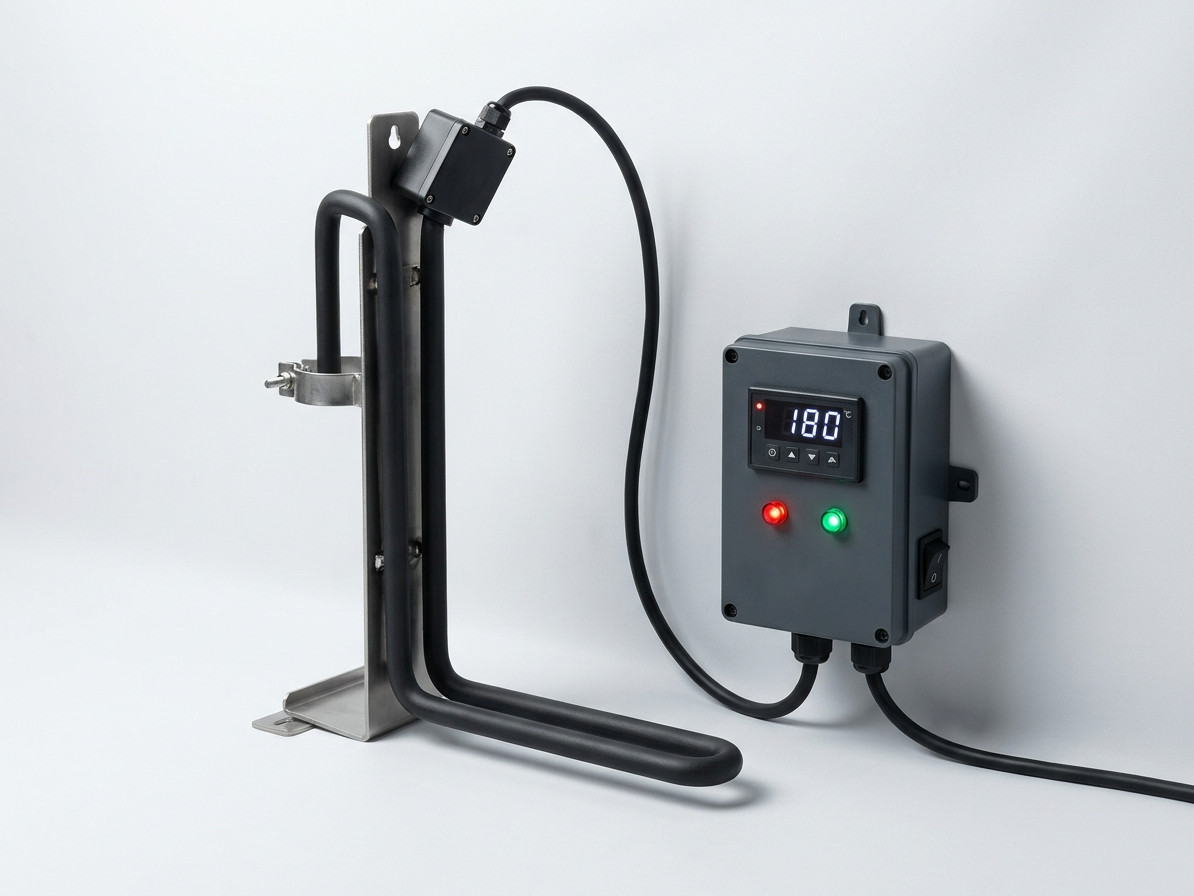
Compact over-the-side elements plus PID control, over-temp protection and level cutoffs, the safety chain every heated tank should have.
Every quote includes the exact price and the honest lead time, if it's a ten-week build, we say ten weeks before you order. Configurations shown are representative; we spec each order to your line.
General industry guidance for immersion heater sheath materials. Concentration, temperature and the presence of fluorides or oxidisers change these answers, so we confirm the selection against your actual chemistry before quoting.
| Sheath | Commonly used in | Watch out for |
|---|---|---|
| Titanium | A wide range of plating and anodizing baths, the general-purpose plating sheath. | Not suited to hydrofluoric acid or to hot concentrated hydrochloric. |
| Quartz | Strongly oxidising acids where metals struggle. | Fragile. Needs a guard, and it is not for fluoride-bearing solutions. |
| PTFE / fluoropolymer | Chemistry that attacks both metals and quartz. | Lower heat transfer than metal, so it needs more surface area for the same kW. |
| 316L stainless | Alkaline cleaners, hot rinse and DI water. | Not for chlorides or acid service. |
| Incoloy & similar alloys | Water, oils and some non-plating process heat. | Generally not a plating chemistry sheath. |
Send what you have and we will fill the gaps with you, nobody gets turned away for an incomplete spec. These are simply the answers that let us quote without a round of questions first.
Plus the coldest ambient the tank starts from. Heat-up load and hold load are different numbers and you need to cover both.
A tank that must be at temperature for a 7 a.m. start needs more kW than one that can warm up over a shift. Covers and insulation reduce it.
This selects the sheath, and the sheath sets how much surface area a given kW needs.
Voltage and phase at the tank, and what spare capacity the panel has. This constrains the design more often than the process does.
Over-the-side, bottom or flanged, immersion depth, and whether the element has to clear a barrel or a rack on its way through.
As a first approximation for a water-based bath: kW ≈ gallons × 8.34 × temperature rise in °F ÷ (3412 × hours to heat). Then add for surface and wall losses, which are significant on an open, uncovered tank and rise steeply with temperature. Send us the volume, the target temperature and the heat-up time you want and we will work it through properly, including the hold load, which is what the heater actually spends its life doing.
Titanium covers a wide range of plating chemistry and is the usual starting point. Quartz goes into strongly oxidising acids, PTFE where both metal and quartz struggle, and 316L into alkaline and DI service. Fluorides rule out several options at once, tell us the bath and we will confirm it.
Yes. An immersion element energised in air overheats within seconds, destroys itself, and can damage or ignite a plastic tank. Level protection is the cheapest insurance on the entire tank.
Yes, PID controllers, high-limit cutouts, sensors, contactors and complete control boxes, whether or not the elements came from us.
Elements are generally replaced; guards, thermowells, junction boxes and controls are usually serviceable. Send a photo of the nameplate and the failure and we will tell you honestly which one you are looking at.
Answer what you know and skip the rest, a person who knows plating reads every RFQ and comes back with a price and an honest lead time, usually the same business day. Attach drawings or a photo of the old part and we'll work from that.