Instead of someone adding chemicals by hand a few times a day, a dosing system adds small amounts automatically, exactly when the bath needs them. The finish stays consistent, chemicals last longer, and rejects go down.
A dosing system is more than a pump on a timer. We quote the whole loop, measurement, control, delivery and the consumables that keep it accurate, as one system with one price.
Amp-hour totalizers, pH/ORP controllers and multi-channel dosing computers, with relay, pulse and 4-20 mA outputs to drive the pumps.
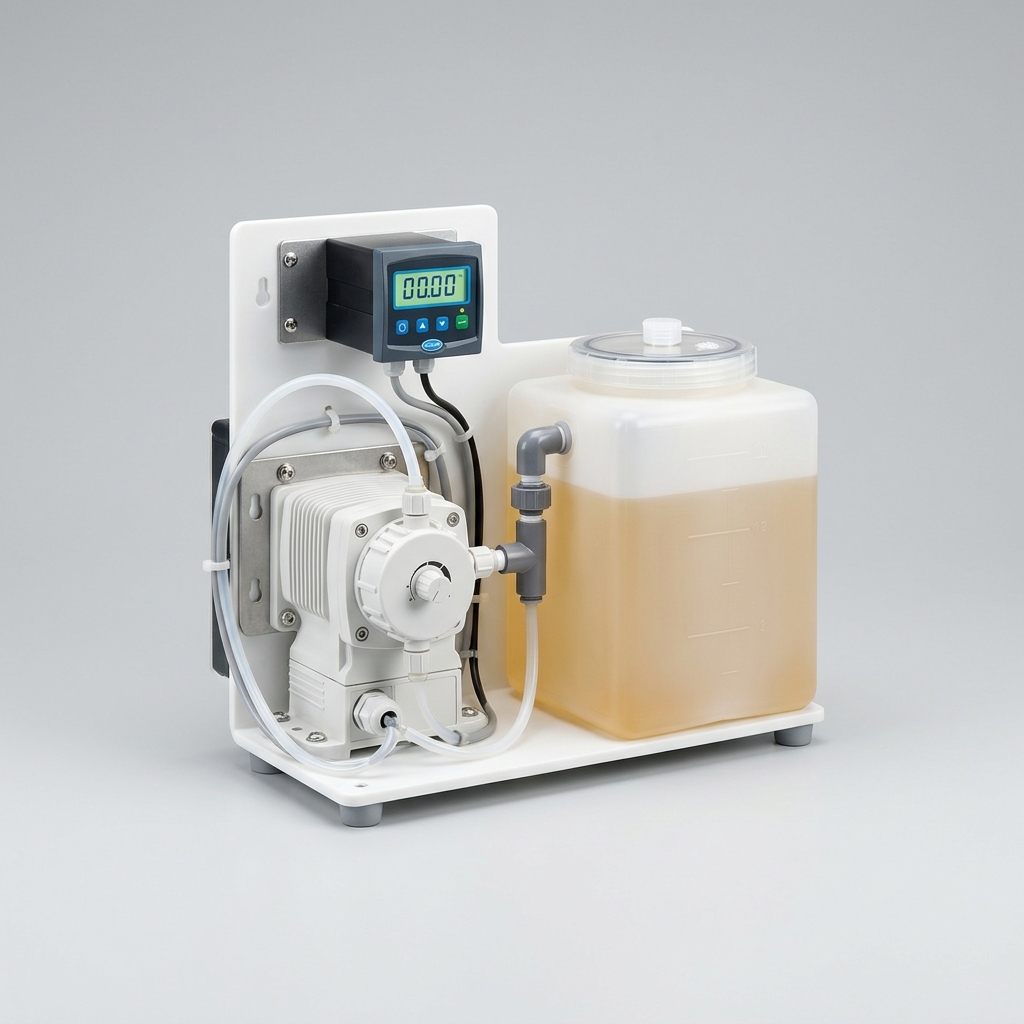
Solenoid and motor-driven metering pumps sized to the addition, with PVDF or PP heads and PTFE diaphragms checked against the chemical being dosed.
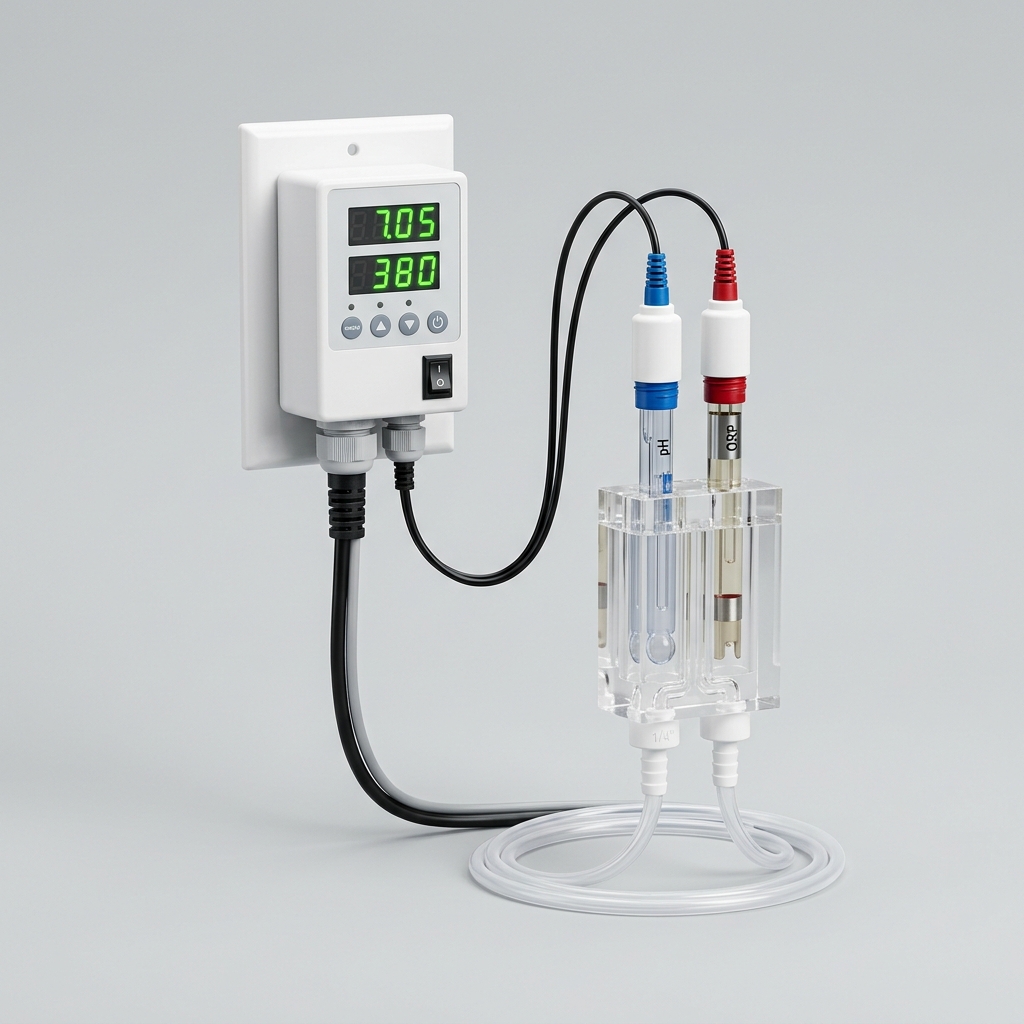
pH, ORP and conductivity probes rated for the bath, plus level switches on the day tank so the system alarms before it runs dry, never after.
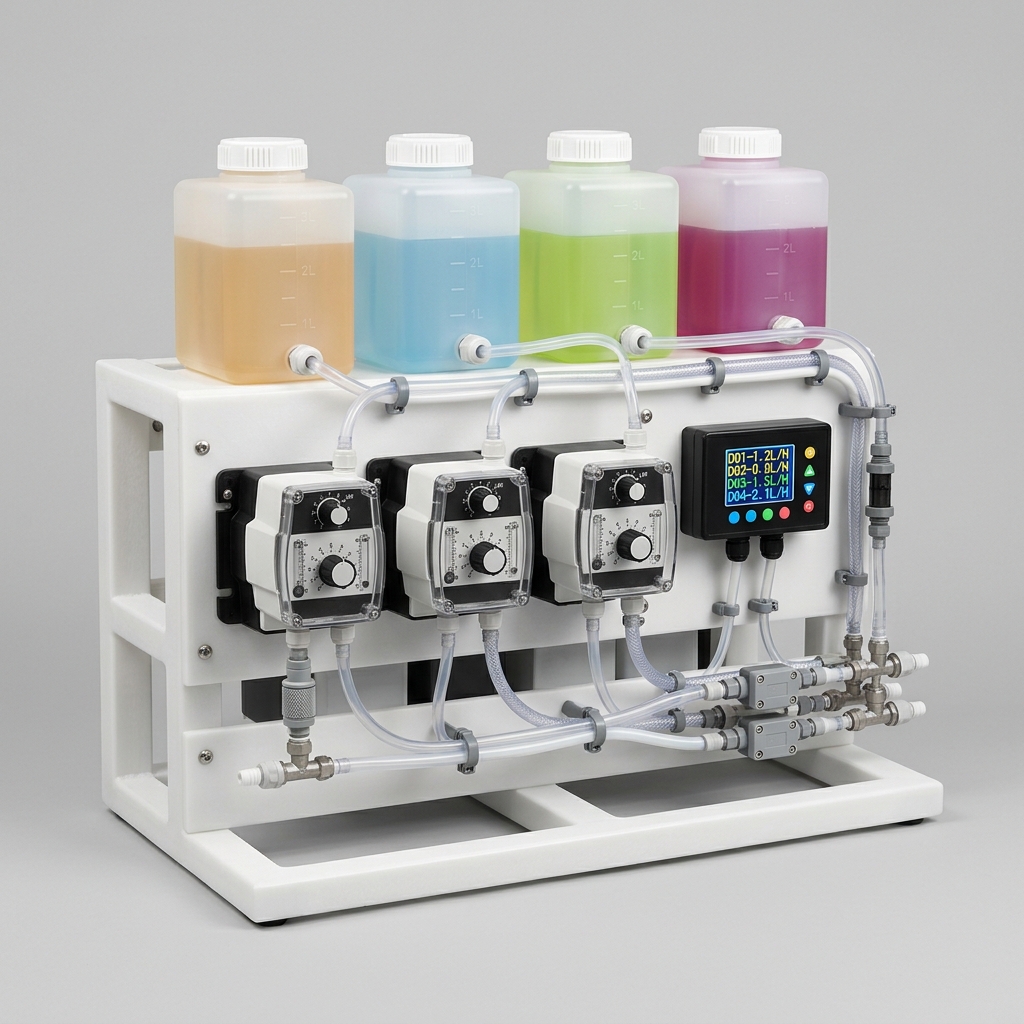
Graduated day tanks, drum stands and spill containment, so concentrate lives somewhere safer than an open drum with a hose in it.
Calibration columns, back-pressure and anti-siphon valves, injection quills and chemical-rated tubing, the parts that decide whether a dose is repeatable.
Shunt signals from the rectifier for amp-hour dosing, and PLC or hoist-controller integration when the dosing belongs inside an automated line.
Three ways to put chemistry on autopilot, from a single-bath doser to a pre-plumbed multi-channel skid.

Brightener and additive replenishment keyed to the work actually plated. An amp-hour meter totals the current, the pump doses the addition, the bath stays in-window.

Controller, probe and pump quoted as one package that holds pH or ORP at set point, for process baths, rinses and waste treatment.

Pre-plumbed skids dosing several chemicals from one panel, with day tanks, calibration columns and containment built in. Arrives plumbed, wired and tested.
Every quote includes the exact price and the honest lead time, if it's a ten-week build, we say ten weeks before you order. Configurations shown are representative; we spec each system to the bath it will control.
The right trigger depends on what drives consumption. This is the shortlist; concentration, temperature and line speed refine the final specification.
| What you are holding | Usual method | Why |
|---|---|---|
| Brighteners & additives | Amp-hour dosing | Consumption tracks the current passed, so dosing per amp-hour replaces exactly what the work removed. |
| pH of a process bath | pH probe control | Drag-in and time move pH independently of current; a live probe corrects what actually happened. |
| Chromate / oxidizer strength | ORP probe control | ORP reads the oxidizing power directly, so dosing follows the true state of the bath. |
| Cleaner concentration | Conductivity or timed dosing | Conductivity tracks cleaner strength well; on lighter duty a calibrated timed dose per shift is often enough. |
| Waste treatment reagents | pH / ORP staged control | Neutralization and reduction steps each hold their own set point, with lockouts so nothing overshoots. |
| Several baths at once | Multi-channel skid | One panel, one containment, one calibration routine, instead of pumps scattered down the line. |
Send what you have and we will fill the gaps with you, nobody gets turned away for an incomplete spec. These are simply the answers that let us quote without a round of questions first.
What is being plated or treated, the chemical being dosed and its concentration. This sets every wetted material.
Brightener level, pH, ORP, cleaner strength, or several at once. Each one picks its own trigger and sensor.
Tank volume and either amp-hours per shift or parts per hour, so the pump range lands where its accuracy is best.
For amp-hour dosing, make and model or a photo of the nameplate, so we know whether a shunt signal exists or we supply one.
Voltage and phase at the installation point, and whether the system should tie into an existing PLC or run stand-alone.
The beaker and the guess. Manual additions swing the bath between too rich and too lean; a dosing system feeds small, continuous corrections keyed to amp-hours or a live probe reading, so concentration stays inside a narrow window all shift.
Brighteners and additives that are consumed by plating work dose best on amp-hours, since consumption tracks the work done. pH correction and oxidizer control dose best on a live probe, since those readings drift with drag-in and time, not just current.
Usually within months. Chemistry held in-window means less brightener burned, fewer rejects, longer bath life and fewer dumps. Distributors tell us the chemistry savings alone typically cover the system inside a year on a busy line.
Yes. A single-channel doser on one problem bath is the most common first step. It needs power, a place to stand the chemical container, and for amp-hour dosing a shunt signal from the rectifier, which we supply if the rectifier does not have one.
Probe cleaning and calibration on a schedule, and tubing or diaphragm replacement as consumables. We stock probes, buffers, tubing and wet ends, and every quote lists the consumables with their part numbers so reordering is one line.
Answer what you know and skip the rest, a person who knows plating reads every RFQ and comes back with a price and an honest lead time, usually the same business day. Attach a photo of the bath or the rectifier nameplate and we'll work from that.